

.png)
Team
4 members
Role
Product Designer
Duration
4 months
Creating a budgeting tool to make
personal finance easier, clearer,
and more actionable for university students
✴ Product Design ✴ information Architecture ✴ Persona Creation ✴ Figma
In the 2024-2025 academic year, there were approximately 19 million university students in the U.S, out of which 1.2 million were international students, many of whom face significant gaps in financial literacy and struggle to manage their budgets while navigating life in the U.S.
Students often experience chaotic personal financial management in the United States due to difficulty maintaining a budget, unfamiliarity with the U.S. financial system and limited awareness of available financial options. How might we help students budegt better and develop sustainable personal finance habits for long-term stability.
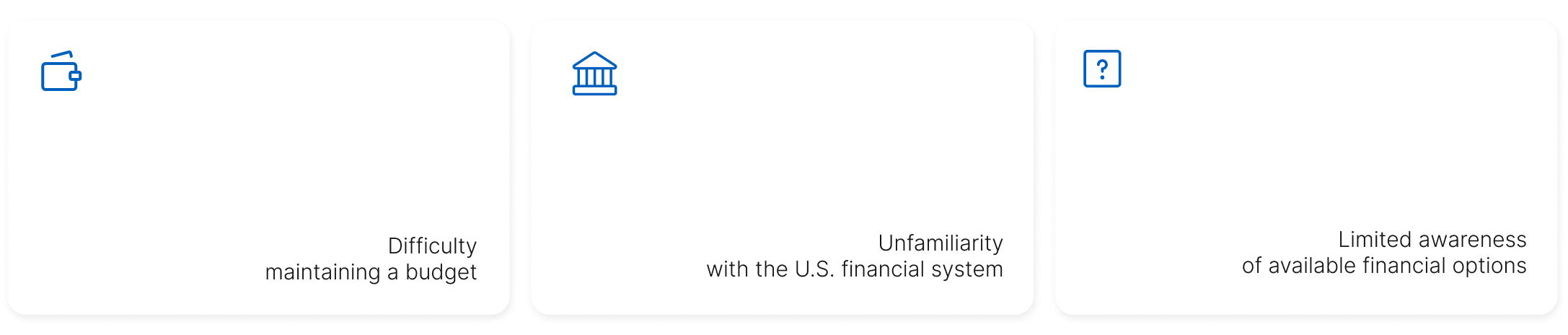
We interviewed 30+ students to understand the issues they face, what methods they use currently to track their budget and how well they understand the financial system. These are some of our insights -
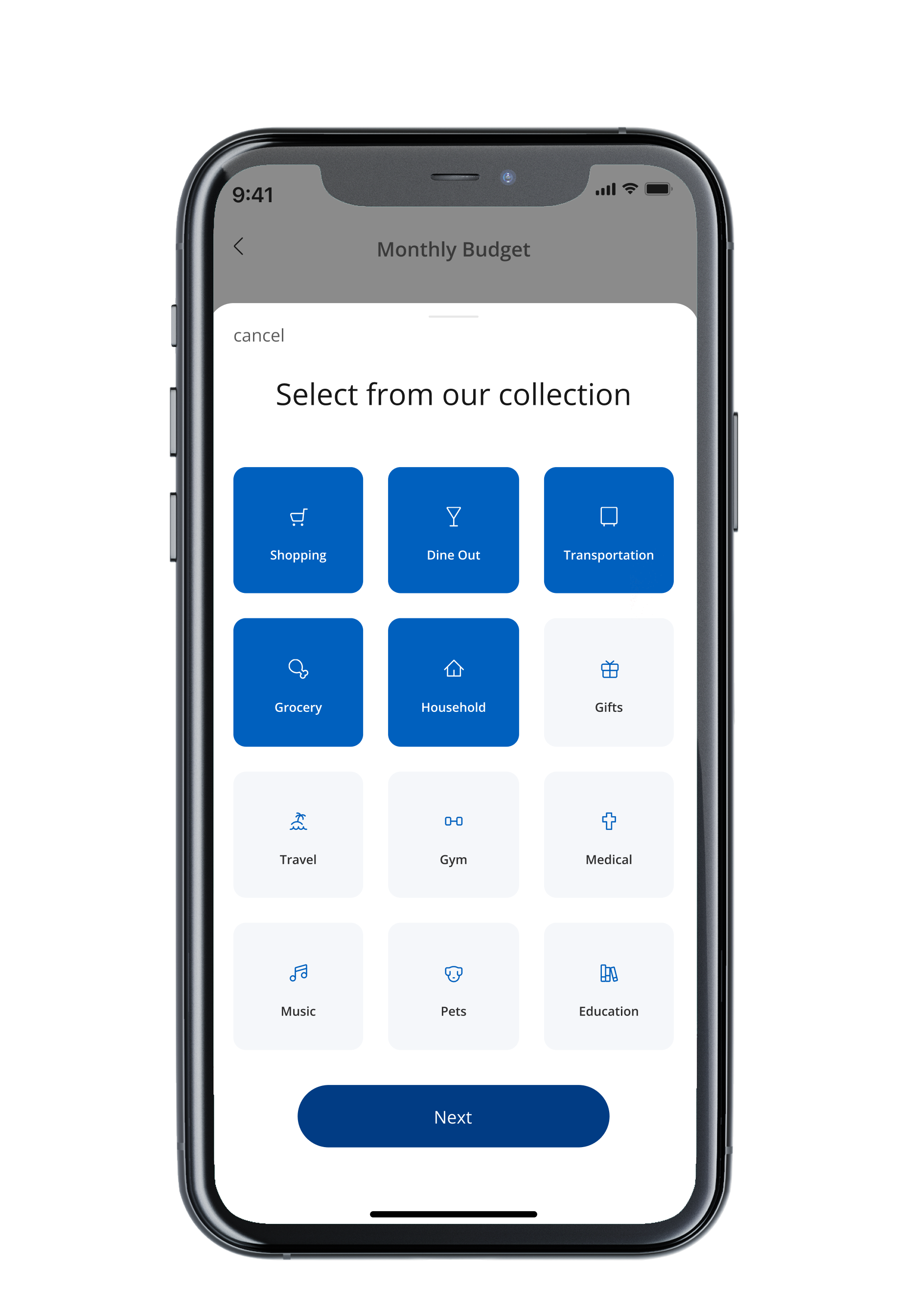
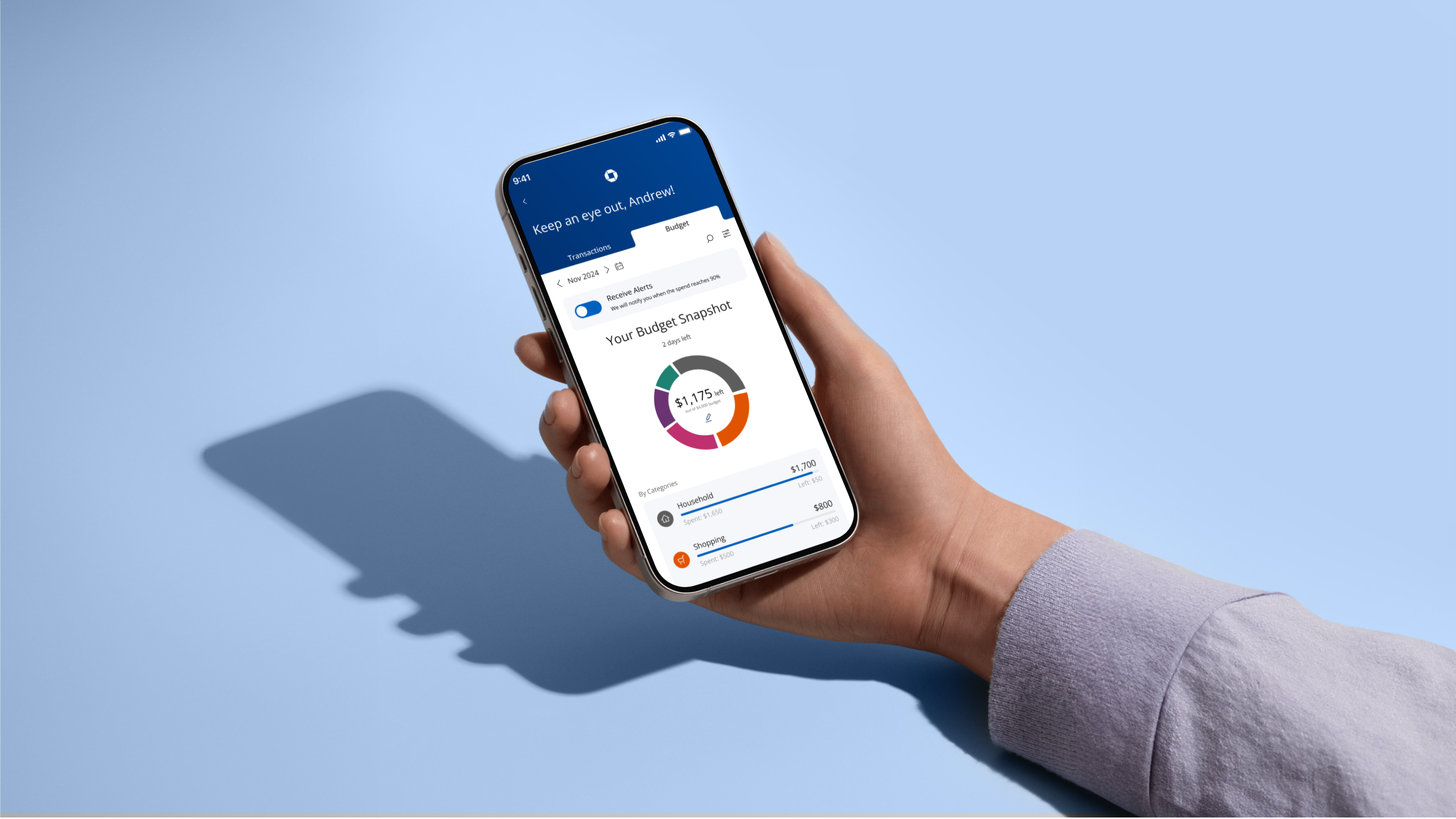
A simple, intuitive budgeting feature for students, that automatically categorizes expenses, displays a clear and digestible dashboard, and allows users to set personalized monthly budget goals for each spending category.
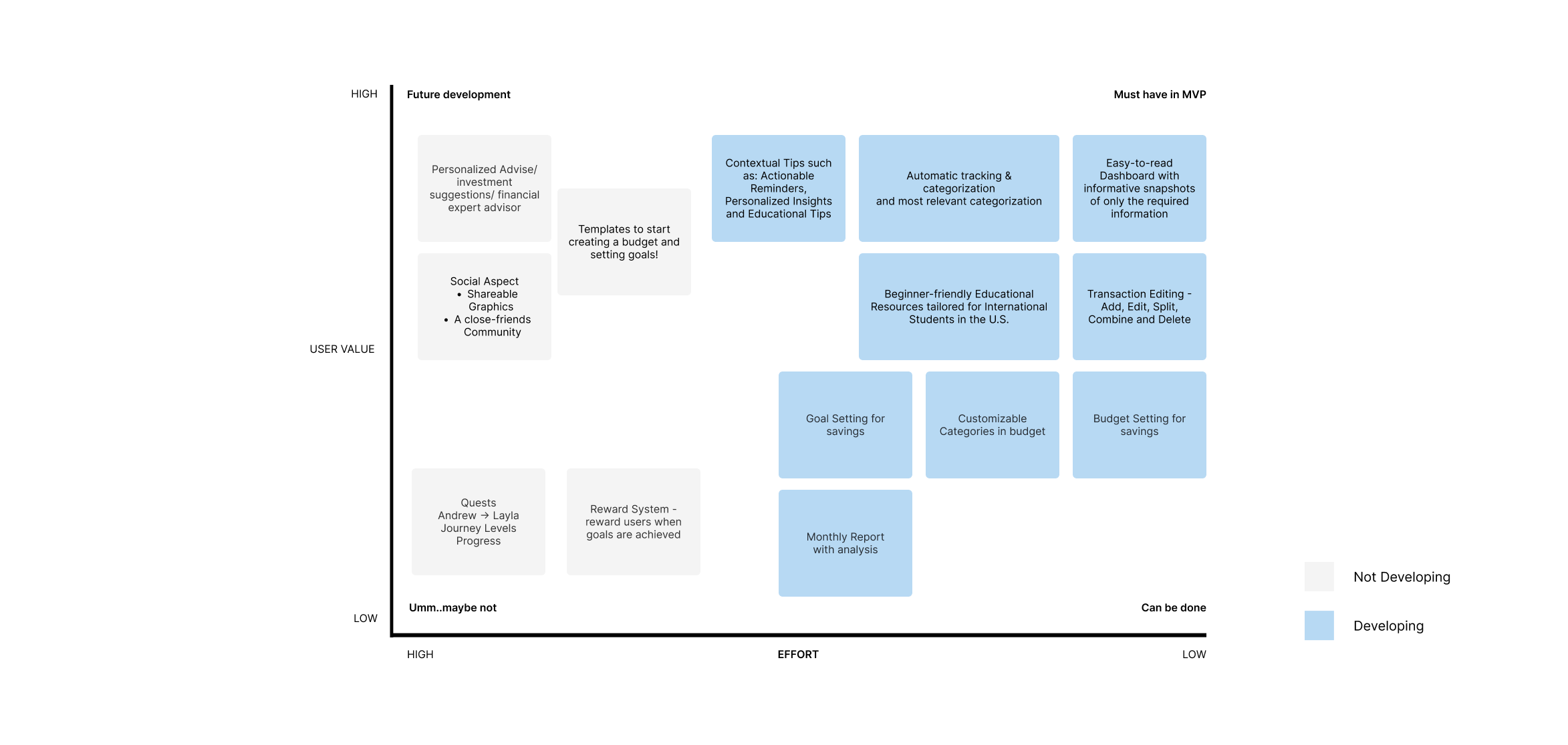
To determine which ideas would deliver the most value with the least friction, I mapped potential features using a prioritization matrix. This helped identify high-impact, low-effort solutions worth pursuing first, while also highlighting features that could be phased in later. The matrix ensured the final direction aligned with user needs, technical feasibility, and business goals.
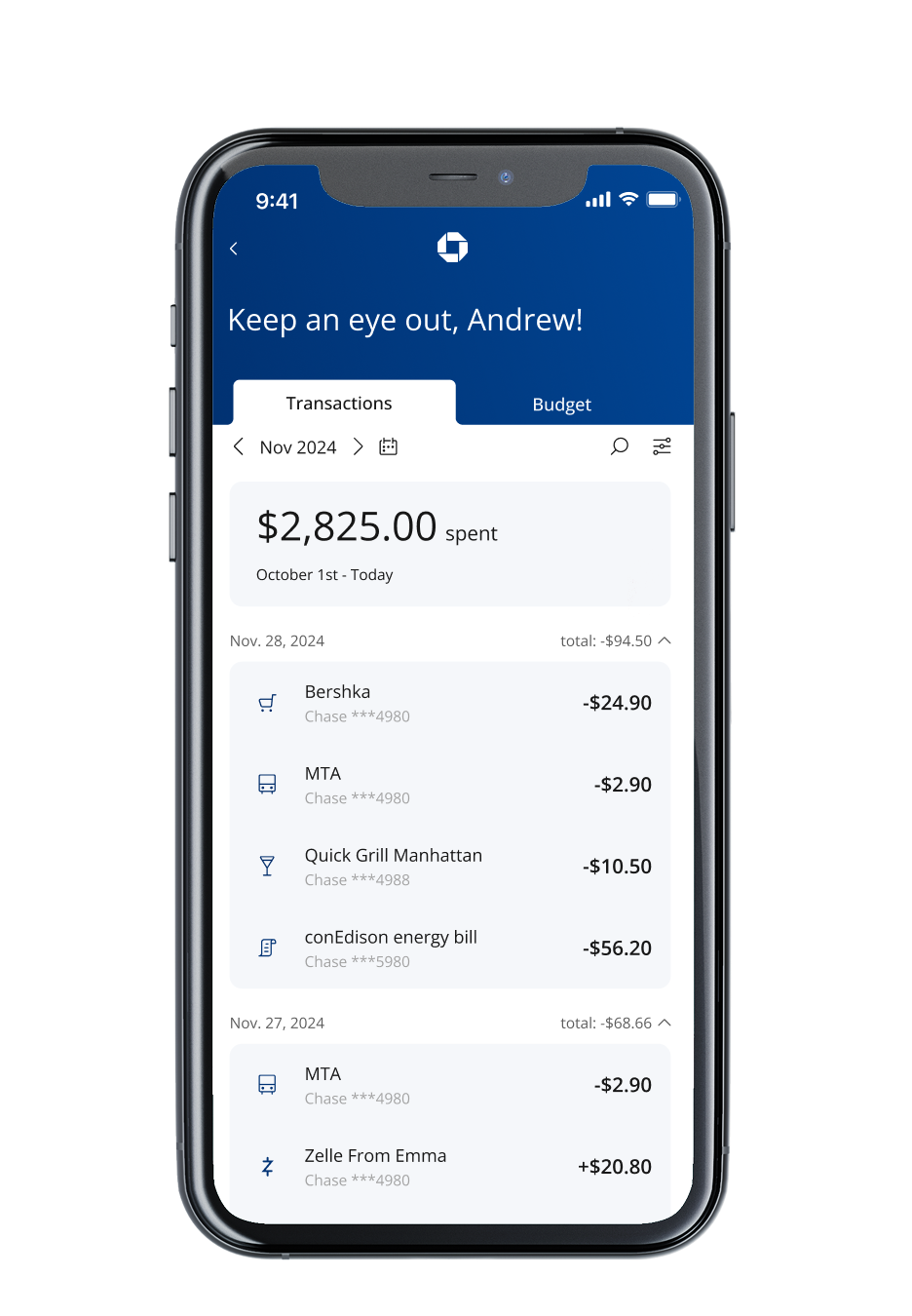
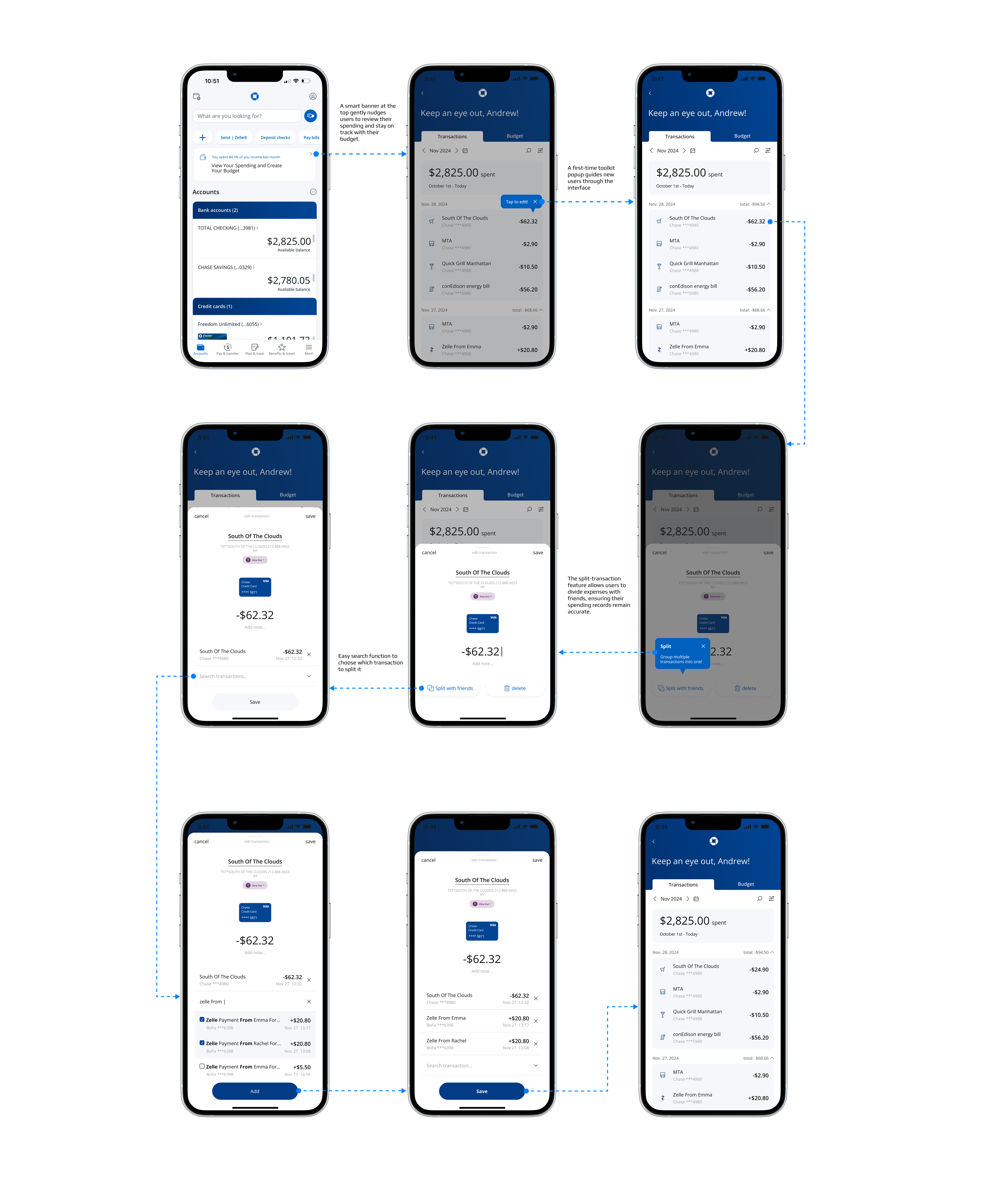
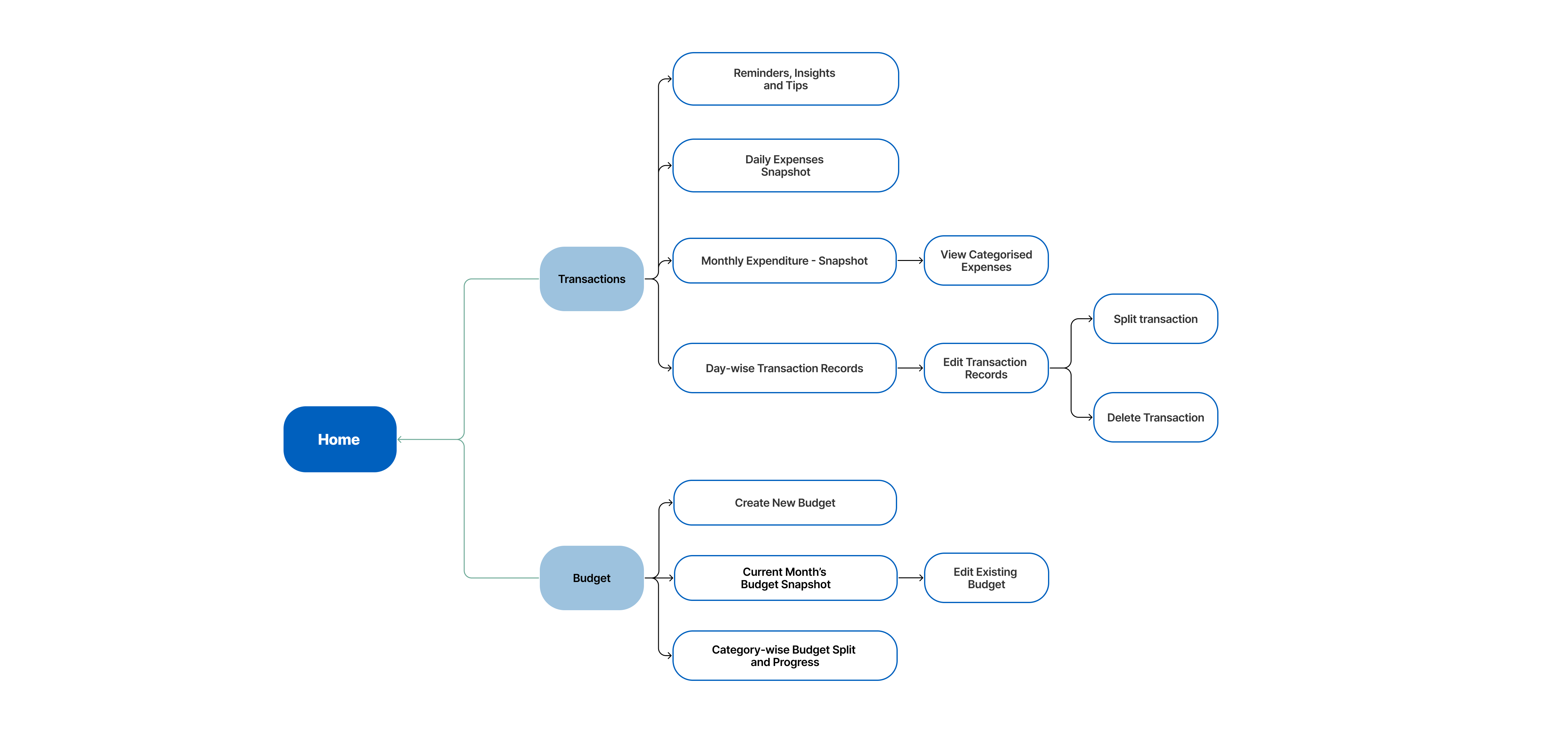
The transactions feature gives users a clear view of their daily spending along with a monthly snapshot, acting as a quick dashboard for helpful tips and reminders. Users can edit individual transactions or split expenses with friends, ensuring their budget stays accurate and up to date.
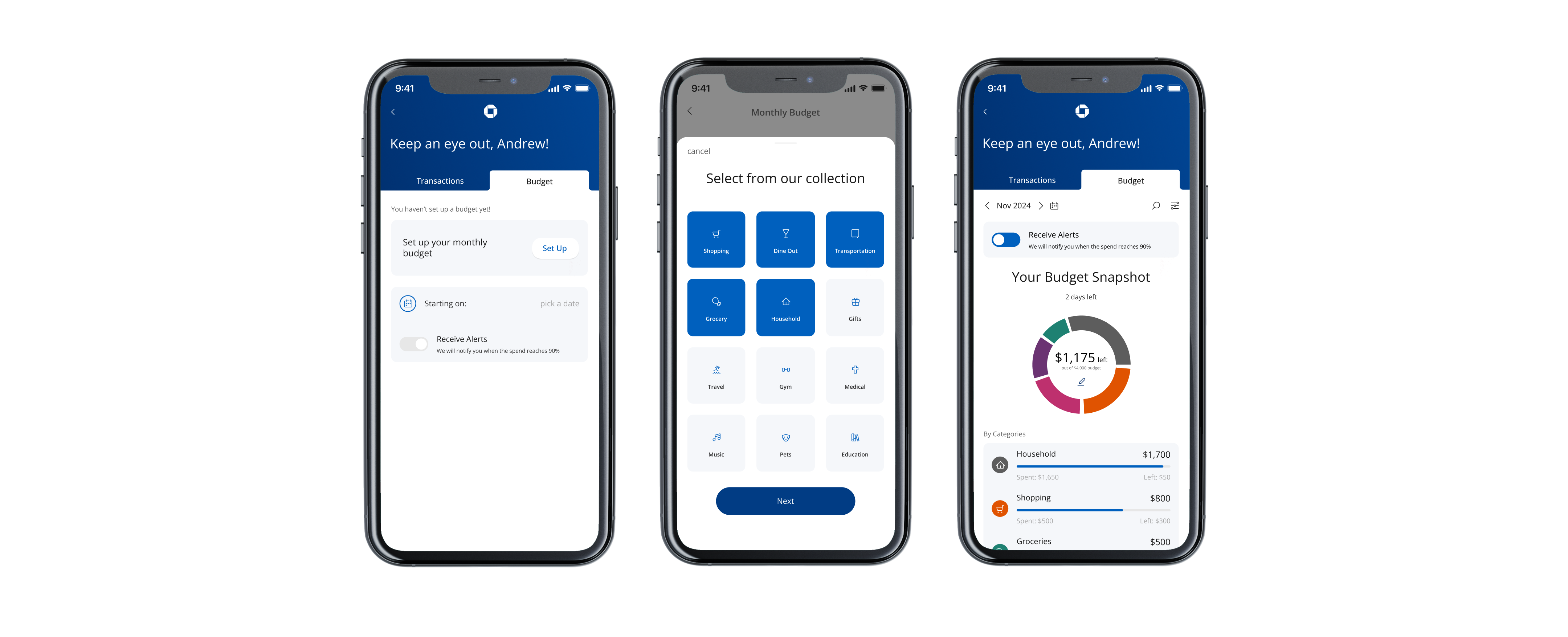
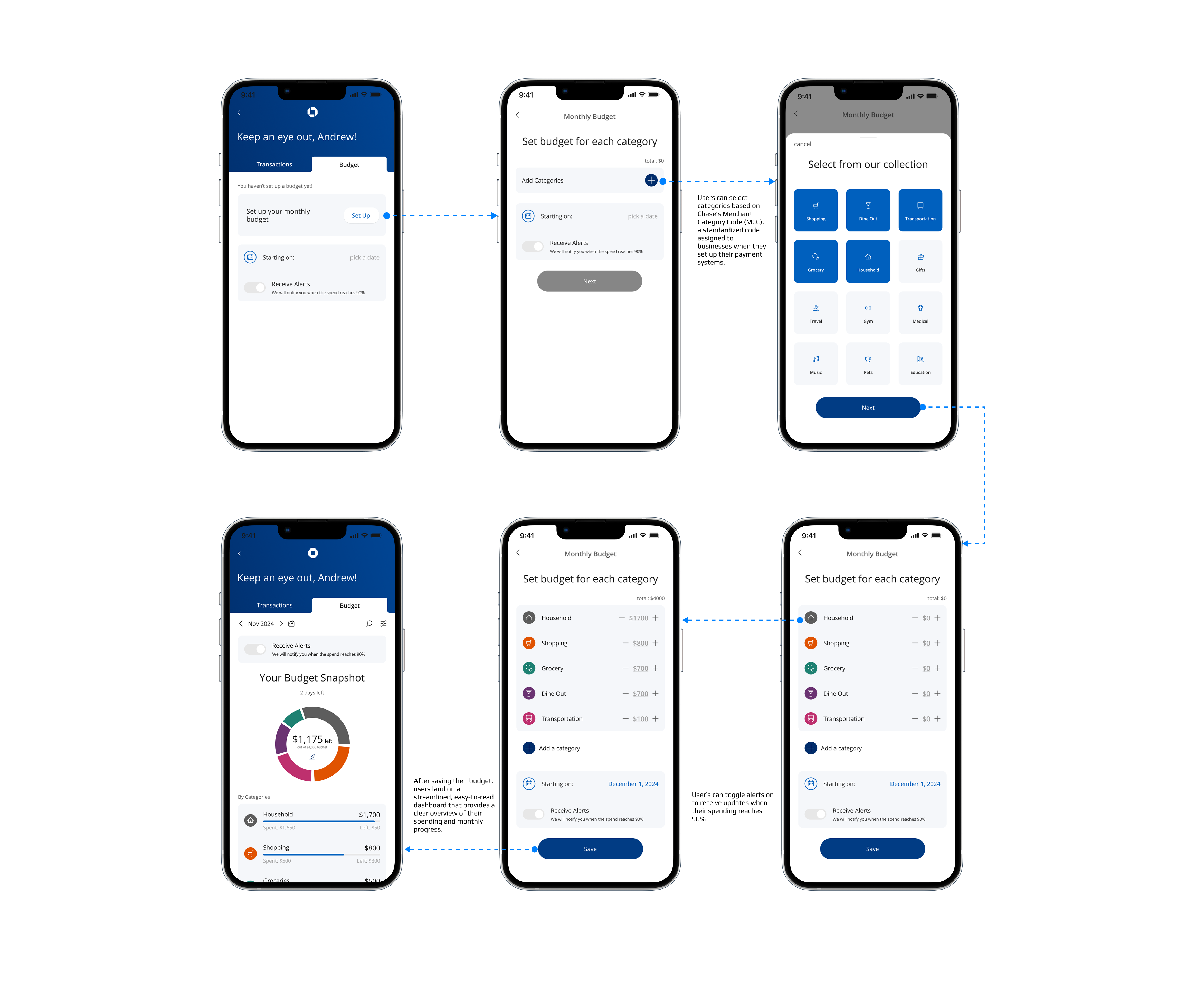
Set a personalised budget for each expense category. The user's expenses will be categorised using the Merchant Category Code (MCC) - a standard code assigned to a business when it sets up its payment system. These codes determine how Chase groups the purchase, making budgeting more accurate and effortless.
1. Beginner-friendly credit cards
2. Micro-investing options through Chase Wealth
1. Onboarding toolkits for international students
2. Integration with campus card systems
1. Cashback offers
2. Curated deals based on spending categories